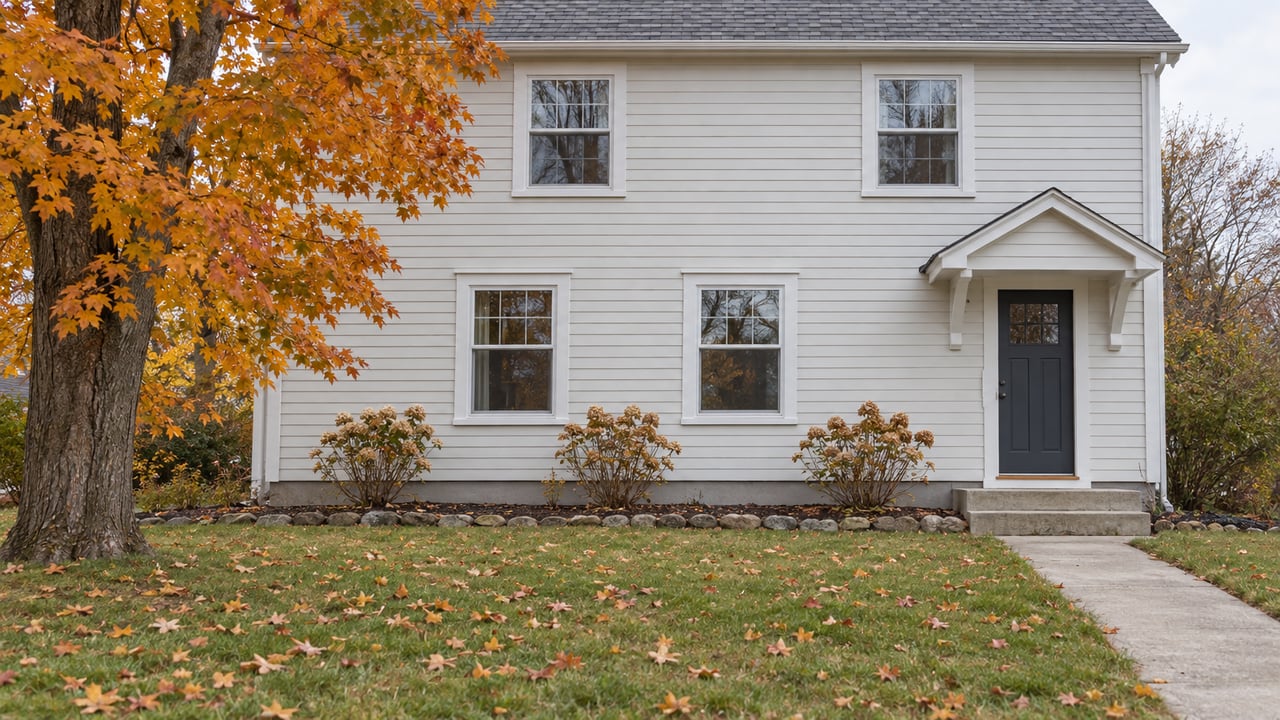
Pleasant Valley's Hamlet Water Question, and What It Means When a House Changes Hands
November 5, 2026
November 5, 2026
"Unlike public water systems, private wells are not regulated by the EPA, New York State or DBCH." That sentence sits on the Dutchess County Department of Behavioral & Community Health's water quality page. For a house in the Pleasant Valley hamlet along Route 44, this matters more than any line on a listing sheet. No agency monitors the water in that home's well, so ongoing testing falls to the owner, or to a buyer during a sale.
For years this was simply how the hamlet worked. In October 2026 the town's own sampling found contaminants on hamlet properties, and a consulting engineer laid out a public water concept that would take years to build. Buyers and sellers in the hamlet now face a gap. The town knows more about local groundwater than it did a year ago, but a sale still turns up only the water information that someone pays to produce.
Some Dutchess County towns require a well test when a property sells. The county health department coordinates with the Town of East Fishkill, the Town of Fishkill and the Town of Wappinger to post those test results on the county website, and it reviews the results and notifies residents when a result may affect public health. Pleasant Valley is not on that list. The county keeps a separate page on mandated private well water testing for the towns that have these local laws.
Without a local law, what's left is New York's statewide disclosure requirement. Under Real Property Law §462, a seller generally has to complete and deliver the Property Condition Disclosure Statement before the buyer signs a binding contract, with some exemptions set out in the statute. On water, the current Department of State form asks the seller two things:
The form asks only whether a test has been done. It doesn't require one, and it encourages buyers to get their own inspections and environmental tests. So in Pleasant Valley, a seller can honestly answer "no" to the testing question, and the sale moves forward on whatever the buyer decides to check.
The hamlet's water has been an open question at Town Hall since the summer. On July 6, 2026, the Pleasant Valley Town Board voted to recruit a five-to-seven-member Water System Advisory Committee. Citizen Portal's summary of that meeting reports that residents had described low aquifer readings and private wells going dry. The committee's page on the town website lists two fall meetings: a presentation by the Dutchess County Water and Wastewater Authority on October 20 and one by Delaware Engineering on October 28.
At the October 28 meeting, according to Citizen Portal's account, Delaware Engineering's consulting engineer said the team had "acquired a $30,000 grant for the town, under the emerging contaminants grant program to perform sampling." He said the resulting maps "show the different properties that are contaminated," with detections that included Freon, total coliform, volatile organics and PFAS. The sampling was meant to help the community qualify for larger infrastructure grants. The meeting summary doesn't say how many properties were affected or at what levels.
Put that next to the disclosure form. The town has a map showing contamination on some hamlet properties. A seller on one of those properties may never have tested, and the form only asks whether a test happened. In this part of Pleasant Valley, a buyer's own well test is often the only water data in the file.
The public water concept now in front of the committee runs on a multi-year timeline. Citizen Portal reported that Delaware Engineering's concept would buy treated water from the Town of Poughkeepsie and run a main down Route 44 into the hamlet. A pump station near Bauer Road would make up for the lack of gravity pressure, and a storage tank would sit on the hill behind the pharmacy. The plan would require major main installation and state approvals.
The engineer's rough sequence, as presented to the committee on October 28:
| Phase | Rough estimate given at the meeting |
|---|---|
| Map, plan and report | About 3 months, with a fee estimated at $30,000 |
| Design | 7 to 12 months |
| Construction | About 2 years |
| Initial construction estimate, core hamlet project | Roughly $8 million to $13 million |
| Potable water in the hamlet | Roughly 3 to 5 years, if work starts immediately |
These are an engineer's early estimates for a concept, not an approved project. The three-to-five-year range also assumes the work starts right away, and the first step is a report the Town Board would still have to review. The board's regular November meeting is on the town calendar for November 16. For anyone buying or selling a hamlet house in the next year or two, the well is the water supply, and its condition at closing is what the transaction runs on.
The idea itself isn't new. In a 2006 town survey included in Pleasant Valley's 2009 Comprehensive Plan, 69.5 percent of respondents said central water and/or sewer was important for hamlet business growth. The town's zoning code describes central water and sewer as what would allow hamlet-scale infill, and it treats individual wells and septic systems as development constraints. The town also recruited for a new Comprehensive Plan Committee this fall, with applications due October 30, 2026. The water question has been part of the hamlet's planning for close to two decades. Contaminant sampling and engineering cost estimates are what's new in 2026.
Buyers looking at the hamlet also want to know how a future water system would be paid for, since that cost can follow the property. New York law sets out the process. The NYS Comptroller's hearing guidance describes two ways to form a town district. Property owners can petition under Town Law Article 12, or the town board can act on its own motion under Article 12-A, subject to permissive referendum. Both require a public hearing. For an Article 12-A water district, the hearing notice covers the boundary, the improvements, the maximum expenditure, hookup fees, the cost to a typical property and the proposed financing method. The map, plan and report must also be available for public inspection.
The Comptroller's report on town special districts explains that district property owners pay through assessments or fees set by the town board, and that capital borrowing is issued as town obligations. In some cases, depending on how the project is financed and what it costs a typical property, the district also needs the Comptroller's approval.
None of those steps has happened yet for the hamlet concept. No district boundary, list of included roads or connection requirement has been made public. The process does guarantee one thing: before any charge reaches a hamlet tax bill, a notice will state the boundary and the typical cost at a public hearing.
This is general information, not legal, tax or financial advice. Anyone weighing a specific property should confirm the details with an attorney, an accountant or the town.
Since no testing rule applies at sale, the state's recommendations are the main guidance a buyer or seller has. The NYS Department of Health recommends testing private well water for bacteria at least once a year and for other contaminants every three to five years. Its residential water testing fact sheet recommends a laboratory certified through the department's Environmental Laboratory Approval Program.
PFAS works differently. The state says it does not regulate PFAS in private wells and uses public water standards as guidance. According to the NYSDOH PFAS page, a PFAS test costs roughly $300 to $600, only a small number of certified labs perform it, and owners should talk with the lab about sample collection before getting bottles. A standard bacteria panel won't answer the PFAS question.
Dutchess County is one of six counties in the state's Private Well PFAS Testing and Mitigation Rebate Pilot Program. Eligible households can get free PFAS testing using EPA Method 537.1 version 2. Rebates for treatment or for connecting to public water are available when PFOA or PFOS results reach 10 nanograms per liter or higher. The program warns that it may pause applications while it tracks funding, so check its current status before counting on it. The county health department takes questions on rebate applications at 845-486-3404.
For a seller, a recent certified-lab result answers the disclosure form's testing question before the buyer has to ask. For a buyer, an independent test is the one source of water data that doesn't depend on what the seller has on file.
Does Pleasant Valley require a well test when a home sells? Pleasant Valley is not among the towns the Dutchess County health department lists as having local well-testing laws for real estate transactions. Those towns are East Fishkill, Fishkill and Wappinger.
Has the town approved a hamlet water district? No. As of the October 28, 2026 committee meeting, the Route 44 pipeline, pump station and storage tank are an engineering concept with rough cost and timeline estimates.
Is the Valleydale water system part of the hamlet plan? No. The Valleydale interconnection with Hyde Park, which the Water and Wastewater Authority presented to the Town Board in May 2026, is a separate proposal.
If you own a home on a well in the Pleasant Valley hamlet and are thinking about selling, it helps to know before you list what your water records show and what the disclosure form will ask. Debra Allan has guided Dutchess County sellers through well-water questions since 1994, and she can walk you through the timing and paperwork alongside your valuation. Request a free home valuation to get started.
I am ready to work with you to help you sell or buy a home! So whether you are a first time buyer, relocation buyer, investor, moving up or downsizing...I am ready to roll up my sleeves to go to work for you! Make your next move with Debbie Allan!