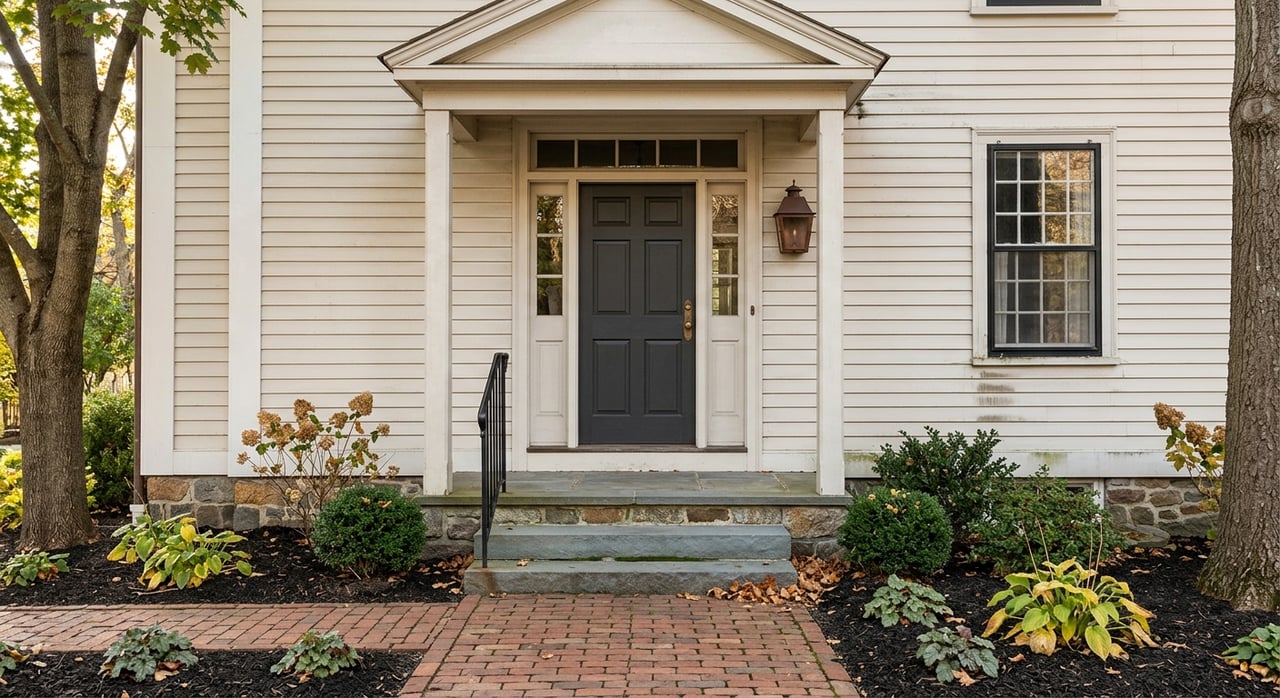
Considering A Historic Home In Hyde Park? Read This First
May 14, 2026
May 14, 2026
Thinking about buying a historic home in Hyde Park? It is easy to fall for the charm first and ask questions later. If you are drawn to old-house character, this guide will help you slow down, look closer, and make a smarter decision before you commit. Let’s dive in.
Hyde Park’s older homes are tied to real local history, not just a popular listing description. The town’s historic core reflects settlement dating back to the early 1700s, Hyde Park’s incorporation in 1821, and a concentration of older buildings in and around Market Street and Albany Post Road.
The town’s walking-tour materials note that the Main, Albertson & Park Place Historic District includes more than 30 dwellings and outbuildings dating roughly from 1840 to 1895. You may see late Federal, Greek Revival, Gothic, and Italianate features there, along with other local examples of Federal, Carpenter Gothic, Georgian Revival, Chateauesque, Mission, and Renaissance Revival styles.
That matters because in Hyde Park, a historic home often has value tied to its original materials, proportions, and street presence. It is not only about age. The town’s design standards also treat buildings constructed before 1945 as historic for Town Core adaptive-reuse review, which shows how seriously older building character is considered locally.
If you buy an older home here, you may be taking on more than routine ownership. New York State Historic Preservation Office guidance says preservation review relies on the Secretary of the Interior’s Standards, which focus on retaining and repairing historic features and using compatible additions.
In practical terms, that means changes to an older Hyde Park home may call for more thought than the same project would in a newer property. If your dream includes replacing windows, changing exterior materials, or adding square footage, it is smart to understand the local review process before you fall in love with a house.
A home’s National Register status is also worth understanding. According to New York SHPO, being listed in the National Register of Historic Places does not by itself create federal restrictions for a private owner, but local ordinances still can affect what you are allowed to do.
A historic home can be wonderful to own, but older houses reward careful due diligence. Hyde Park’s local standards point to the features that often need the most thoughtful review and repair.
Start with these big-ticket items:
These are not just cosmetic details. Hyde Park’s design standards specifically call for retaining foundations, chimneys, window openings, shutters, roof forms, and other character-defining elements when they are repaired or replaced.
That is a useful clue for buyers. The parts of the home that define its historic look are often the same parts where repairs can become more specialized, more regulated, or more expensive.
For any older Hyde Park home, a clean permit record is a major plus. The Town of Hyde Park Building Department lists permits for common projects such as roofing, siding, windows and doors, HVAC, electrical work, oil tanks, finished basements, decks, pools, sheds, demolition, and solar and battery systems.
The town says these activities require an application, fee, plans, and inspections before construction. It also states that work done without a permit is charged at double the fee, and building certificates will not be issued on parcels with unresolved violations or expired permits.
That means you should ask clear questions before moving forward:
If the seller cannot clearly document past work, that does not always mean a deal is off. It does mean you should investigate further before you take on someone else’s unfinished paperwork or unapproved construction.
Older homes can come with hidden issues that newer buyers may not expect. Some are manageable, but only if you know they are there.
Homes built before 1978 are more likely to contain lead-based paint. EPA says buyers should receive lead disclosure information and the Protect Your Family from Lead in Your Home pamphlet before purchase.
If future renovations will disturb lead paint, EPA requires certified firms and lead-safe work practices. For a buyer, that means a charming original window or painted trim may carry extra renovation steps later.
Asbestos can still be found in older roofing and siding shingles, insulation, textured paint and patching compounds, vinyl flooring and adhesives, pipe insulation, and furnace gaskets. New York State Health says testing is the only way to know for sure.
If asbestos needs to be removed, homeowners should use a New York State Department of Labor licensed abatement contractor. This is not an area for guesswork or shortcut repairs.
Radon is not just an old-house issue, but it should still be on your checklist. EPA recommends testing all homes and fixing homes at 4 pCi/L or higher.
If a home has been renovated, or if you plan to use a lower level differently than the current owner has, a new test may make sense. A finished basement, guest space, or home office can change how important that lower-level air quality becomes to you.
If the property uses a private well, Dutchess County says routine monitoring is the homeowner’s responsibility. The county strongly recommends annual coliform testing, checking for possible contamination sources such as failing septic systems or old underground fuel tanks, and keeping track of the well’s age and depth if possible.
For septic systems, Dutchess County advises pumping every 2 to 10 years depending on use, avoiding toxic discharges, and getting county approval for repairs or replacements when needed. If a historic home is not on municipal water or sewer, these systems deserve extra attention during your inspection period.
A standard home inspection is still essential, but it has limits. In New York, a licensed home inspector mainly reports on observable systems and components such as heating, cooling, plumbing, electrical, foundation, roof, masonry, and interior and exterior elements.
That is helpful, but historic homes often need a broader team. Depending on the property, you may want targeted specialists for:
This extra step can give you a much clearer picture of what you are buying. In many cases, it is the difference between feeling informed and feeling surprised after closing.
If you plan to remodel, the Town of Hyde Park Building Department and Zoning staff are part of the process. The town says the Building Department reviews plans, issues permits, provides inspections, and assists the Zoning Board of Appeals and Design Review Commission.
For dwellings, the application package can require stamped plans, zoning review, a deed, setback and driveway paperwork, and county health coordination for septic and well work. This is one reason it helps to think about your renovation goals before you make an offer.
In Hyde Park’s historic core and in projects involving older buildings, the town’s design standards favor preservation over wholesale replacement. The standards call for repairing original materials where feasible, avoiding synthetic siding when it would harm historic character, preserving original windows and doors, keeping roof forms intact, and placing additions to the rear or in less visible side locations so they read as additions.
That does not mean you cannot update a home. It means your plans should respect the house you are buying and the local rules that may apply to it.
A beautiful older house can create urgency, especially in a competitive market. The best move is to stay curious and get specific answers early.
Here are smart buyer questions to ask:
These questions can save you time, money, and stress. They can also help you decide whether a home is the right fit for your budget, your timeline, and your tolerance for future projects.
Buying a historic home in Hyde Park can be deeply rewarding. You may get craftsmanship, architectural detail, and a sense of place that is hard to find in newer construction.
At the same time, the smartest buyers balance charm with documentation, inspections, and a clear understanding of local renovation rules. If you go in with open eyes, you are far more likely to enjoy the history without being blindsided by the upkeep.
If you are considering a historic home in Hyde Park and want local guidance grounded in experience, Debra Allan can help you evaluate the property, ask the right questions, and move forward with confidence.

I am ready to work with you to help you sell or buy a home! So whether you are a first time buyer, relocation buyer, investor, moving up or downsizing...I am ready to roll up my sleeves to go to work for you! Make your next move with Debbie Allan!