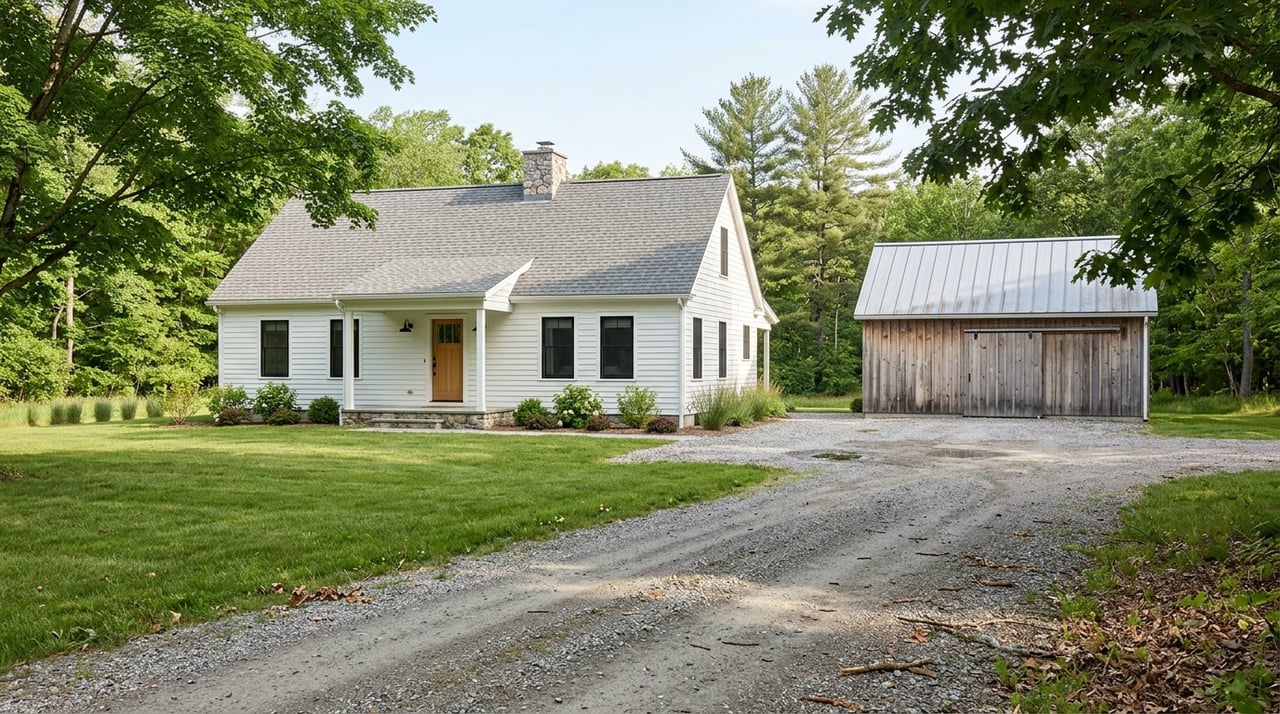
Buying Rural Property In Union Vale Without Surprises
June 4, 2026
June 4, 2026
Buying in Union Vale can feel like a dream at first glance. You see acreage, privacy, barns, and long tree-lined drives, and it is easy to imagine a peaceful country lifestyle. But rural property has a different set of rules than a typical suburban home, and knowing what to check before you buy can help you avoid expensive surprises later. If you are considering a home in or around Lagrangeville and Union Vale, here is what deserves your attention first. Let’s dive in.
Union Vale is a rural town in south-central Dutchess County with 37 square miles of land and nearly 2,000 parcels. That setting is part of the appeal, but it also means many homes come with more land, more privacy, and more owner-managed systems than buyers expect.
In practical terms, you may be evaluating things that are not major issues in a more typical neighborhood. Access, drainage, wells, septic systems, and permit history can all affect your day-to-day experience and your future resale.
One of the most important questions is how the property is accessed. In Union Vale, some homes are on public roads, while others rely on shared or private roads.
If a lot accesses a public roadway through a private roadway, town code requires that road to meet town standards and be tied to a long-term use, ownership, and maintenance agreement approved by the Planning Board and recorded with the Dutchess County Clerk. That means you should not treat a private road like a casual driveway arrangement.
The town code also sets specific standards for private roads. These include a 45-foot right-of-way or easement, a 22-foot cartway, 3-foot shoulders, a 12-inch gravel foundation, and an asphalt surface.
If the property is part of a conservation subdivision, there may also need to be a homeowners' association or similar structure with the authority to collect maintenance funds and impose liens if needed. For you as a buyer, that is a reminder to ask not just whether access exists, but how it is maintained and documented.
In Union Vale, the driveway itself can be a due-diligence issue. Town law requires driveways to connect to an improved public or private roadway, meet sight-distance standards, and remain serviceable for the life of the home.
Long driveways need even closer review. Driveways longer than 500 feet must include improved turnouts or pass-by areas, and steeper driveways can trigger added requirements such as paved aprons, full-length paving, and engineered drainage plans.
This matters because a long or steep drive affects more than convenience. It can influence winter access, delivery access, emergency response, and future maintenance costs.
Drainage is not a side issue in rural Union Vale. The town's stormwater program focuses on protecting waterbodies, watersheds, floodplains, and wetlands, and the town's hazard mitigation planning identified private driveways with undersized culverts as a major localized flood problem.
If a driveway crosses a wet area, stream, floodplain, or wetland, ask more questions. You will want to know how runoff moves, whether culverts are sized appropriately, and whether stormwater problems have affected access in the past.
A damaged or undersized culvert can become more than a repair bill. It can also interfere with emergency vehicle access, which makes this both a safety and ownership issue.
Many rural properties rely on private wells, which means water quality is largely your responsibility as an owner. New York State says private wells should be tested at least once a year for bacteria and every 3 to 5 years for other contaminants.
Dutchess County recommends that private-water samples be analyzed by a New York State ELAP-approved lab. The county also recommends testing for coliform and E. coli along with a broader list of chemical parameters.
This is especially important because contamination from a nearby sewage disposal system can show up in a well. Before you buy, ask for the most recent water test and confirm the lab used was appropriately approved.
New York also notes that private-well owners in Dutchess County may be eligible for the state's PFAS testing and mitigation rebate pilot. That does not replace your due diligence, but it is one more reason to gather clear records early.
A rural septic system should come with documentation, not guesswork. Dutchess County says septic tanks should be pumped regularly, with timing that can range from every 2 to 10 years depending on usage, while New York State Department of Health guidance says pumping every 2 to 3 years is appropriate.
The takeaway is simple. You should ask for the septic approval record, a sketch showing the tank location, receipts for pumping, and the date of the last pumping or inspection.
You should also ask where the leach field is located and whether there have been repairs or recurring issues. Knowing the system layout can help you avoid future problems with landscaping, additions, fencing, or routine maintenance.
One reason buyers love Union Vale property is the flexibility of rural living. Garages, sheds, barns, stables, studios, greenhouses, and similar structures can add real appeal and function.
But accessory structures are still regulated. Union Vale's zoning code defines these structures broadly, and the town's building department uses a permit-driven process for many types of work.
Some smaller structures may be exempt in limited situations. For example, one-story detached sheds or similar structures up to 144 square feet may be exempt from a building permit if they have no electric, heating, or plumbing. The zoning code also allows certain portable accessory structures up to 100 square feet without a building permit or certificate of occupancy if they have no foundation or utilities, are under 10 feet high, and still meet setback rules.
That said, permanent structures are a different story. Outside the RD10 and RA5 districts, the code generally limits the combined roofed floor area of permanent accessory structures to the lesser of the principal building size or 1,500 square feet, and generally allows no more than three permanent accessory structures on a residential lot unless the lot is over 10 acres and a special use permit is granted.
Agricultural buildings may be treated differently in some cases, so it is smart to check each barn, workshop, or outbuilding individually. Do not assume an older structure is automatically compliant just because it has been there for years.
Union Vale's forms and applications make it clear that approvals can be required for accessory structures, driveways, floodplain construction, and wetland disturbance. For you, that means permit history should be part of your review.
Ask whether sheds, barns, fences, driveway extensions, and site work were completed with the right approvals. Missing paperwork can create complications during inspection, financing, title review, or resale.
Even if you plan to stay for years, resale should still shape how you evaluate a property. In rural markets, the strongest resale stories are usually backed by clean documentation.
The most helpful records include a current survey, recorded easements, a private-road maintenance agreement, septic approvals and pumping records, well-water test results, and permits for outbuildings or driveway work. These items help show that the property's access, systems, and structures are legal and maintained.
Rural features can absolutely add value and appeal. At the same time, long driveways, private-road obligations, older wells or septic systems, and undocumented structures can narrow the buyer pool if the paperwork is incomplete.
Before you move forward on a rural property in Union Vale, make sure you have answers to these basics:
Rural property can be incredibly rewarding, but it asks more of you as a buyer. The details are often hidden in documents, site conditions, and town requirements rather than in the listing photos.
That is where local experience matters. When you understand how road access, drainage, private utilities, and permit records work in Union Vale, you can make a more confident decision and avoid buying into problems that only show up after closing.
If you are considering a rural home in Union Vale, Lagrangeville, or nearby Dutchess County communities, working with a locally rooted broker can help you ask better questions before you commit. For experienced, high-touch guidance backed by decades of Dutchess County knowledge, connect with Debra Allan.

I am ready to work with you to help you sell or buy a home! So whether you are a first time buyer, relocation buyer, investor, moving up or downsizing...I am ready to roll up my sleeves to go to work for you! Make your next move with Debbie Allan!